 Patrick Cooper
Key Takeaways
- Wipe the inner folds of an Electrolux washer door seal dry after every load and leave the door ajar so the folds can dry.
- Run a monthly clean cycle with washer cleaner, or the method your owner manual allows.
- Mold that has penetrated the rubber cannot be removed by surface cleaning, and the seal then has to be replaced.
- A torn, cracked or stiff seal, or water dripping from the door during a cycle, should be replaced promptly.
- A door boot seal replacement starts from $175 on this site, a modest cost against floor damage or a failed control board.
The Bottom Line
Dry the folds after each load, clean monthly and look at the seal in good light. If spots return within days, the smell survives a clean cycle or the rubber is torn, book a seal replacement.
The rubber seal around the door of a front-load washer does two jobs at once. It keeps the water in the drum during the cycle, and between cycles it forms a ring of deep folds that stays damp unless somebody dries it. The second job is the one that causes trouble: black spots in the folds, a musty smell that survives a cleaning cycle and, eventually, a drip from the door during a wash. Electrolux washer door seal mold is slow to arrive and slow to leave, so this guide is the routine that keeps the seal clean, the signs that mean it has gone past cleaning, and why it matters beyond the smell.
| What you see | What it usually means | What to do |
|---|---|---|
| Black or dark spots in the inner folds | Mold growth on the surface | Wipe and clean now, monitor |
| A musty smell even after a clean cycle | Mold or bacteria in the seal or behind it | Deep clean; if it persists, replace |
| Water dripping from the door during wash or spin | A compromised seal | Replace the seal promptly |
| Tears, cracks or stiffening in the rubber | The seal has aged out | Replace the seal |
How Do You Clean Mold From an Electrolux Washer Door Seal?
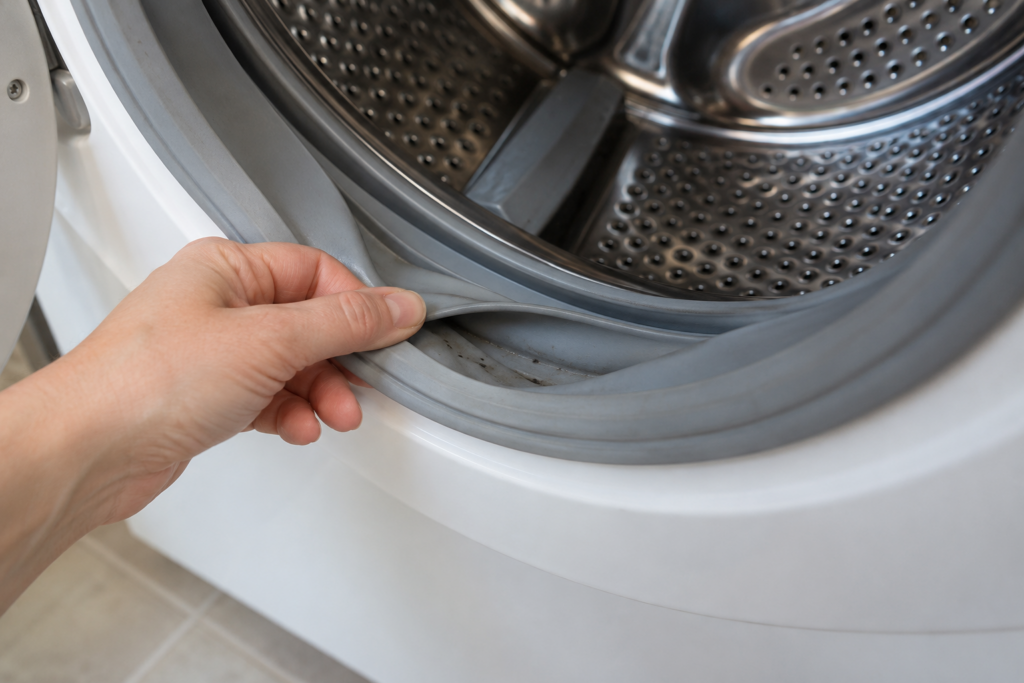
Wipe the inner folds dry after every load, and run a monthly clean cycle with a washer cleaner, and check your owner's manual before using anything else on the rubber. The wiping is the part that matters most, because it removes the moisture mold needs, and it takes less time than loading the dryer. Leave the door ajar afterwards so air can circulate through the drum and the folds.
Surface mold responds to this routine, and a clean seal stays clean if the routine continues. The limit is what the notice states plainly: if mold has penetrated the rubber, surface cleaning will not eliminate it, and the seal has to be replaced. A cloth that comes away black after repeated cleaning, or spots that return within days, are the signs you have reached that limit.
- Pull the seal back gently — the dirt collects in the deepest fold at the bottom, where water pools.
- Wipe with a dry cloth after each load — the site's advice, and the single most effective habit.
- Run a monthly clean cycle — washer cleaner, or whatever your owner's manual allows.
- Leave the door ajar — a closed door keeps the drum humid and the folds wet.
Why Does an Electrolux Washer Door Seal Grow Mold?
Because the folds of the seal hold water that never has a chance to dry. The site describes a damaged or mold-affected seal as one that can leak during wash cycles and harbor mold and bacteria that affect indoor air quality and produce persistent odors. A front-load washer closes tightly by design, so a door shut on a damp drum is the ideal environment for mold.
The same routine that protects the seal protects other parts. The cost guide on this site recommends wiping the door gasket weekly with a damp cloth to remove residue that degrades the rubber over time, cleaning the coin trap monthly, using high-efficiency detergent in the recommended amounts and not overloading the drum. Residue from too much detergent feeds the same film that mold lives on.
How Do You Know the Seal Needs Replacing?
When cleaning stops working or the rubber itself is damaged. Four signs are listed on this site, and the last two are structural, so no amount of cleaning fixes them:
- Black or dark spots on the inner folds — mold that returns within days of cleaning has got into the rubber.
- A persistent musty smell — still there after a clean cycle, which means the source is the seal or what sits behind it.
- Water dripping from the door — during a wash or spin cycle, which means the seal is no longer sealing.
- Visible tears, cracks or stiffening — the rubber has aged out and will not recover.
A torn or damaged seal should be replaced promptly, and the reason goes beyond tidiness. Water escaping through a compromised seal can damage flooring and, if it reaches the motor or the control board, create electrical hazards. The cost guide lists the door boot seal replacement from $175 for the repair, which is a modest price against a damaged floor or a failed board.
A Weekly and Monthly Routine
The whole upkeep takes a few minutes and fits into laundry day. Doing it on a schedule is what prevents the slow build-up that turns a wipe into a replacement.
- After every load, wipe the inner folds with a dry cloth and leave the door ajar.
- Weekly, wipe the whole gasket with a damp cloth to remove detergent residue.
- Monthly, clean the coin trap and run the clean cycle with washer cleaner or whatever your manual allows.
- Each month, look at the folds in good light for dark spots, tears or stiffness.
Check your owner's manual for what it allows in the clean cycle. The site mentions vinegar, and some manufacturers prefer a washer cleaner because of the rubber, so follow the one that applies to your model. Our Electrolux washer and dryer maintenance guide covers the rest of the laundry-room upkeep.
When the Smell Keeps Coming Back
A smell that returns after cleaning is a diagnostic clue, not a failure of effort. Work through it in order, and stop at the first step that holds for a couple of weeks:
- Dry the folds and the door glass — then keep the door ajar for a full day between loads.
- Run the clean cycle with hot water — washer cleaner, or the method your manual allows.
- Check the coin trap and the drain filter — standing water there smells too, and it is easy to blame the seal.
- Replace the seal — if the smell survives all of that, mold embedded in the rubber is the likely source.
Doing this in order stops you paying for a new seal when the source was a dirty trap, and it stops you scrubbing a seal that has already failed.
Leaks and What Else They Point To
Water at the door is not always the seal. The site's washer E13 page covers a different case, an internal leak sensor triggered by water inside the machine, and washer E41 covers a door that is not secured. A leak that appears only during wash or spin, with a visible tear or a gap in the rubber, points at the seal itself. A leak with no damage to the seal needs a technician's eye. For the full question of whether to repair an ageing washer, see is it worth repairing an Electrolux washer.
When a replacement is needed, the visit is short and the technician looks at more than the rubber. A seal that has leaked for a while can leave water in places that are easy to miss, so a good inspection checks the drum area and the floor beneath the machine as well, and tells you if anything else has been affected.
Booking the Repair
Door boot seal replacement is part of Electrolux washer repair. Tell us the model, what you can see in the folds and whether any water has reached the floor. Schedule a visit or contact us. The final price is confirmed after on-site diagnosis, with a written estimate before any work begins.