 Patrick Cooper
Key Takeaways
- Peel the lint off before every load, and wash the screen with warm soapy water once a month.
- If water pools on a clean, dry screen instead of running through, a softener film is blocking the airflow.
- A restricted exhaust is the leading cause of dryer fires, and an overheating code such as E62 is the dryer's warning for it.
- Repeated overheating codes and blown fuses usually trace back to airflow, so clear the vent before replacing parts.
- The exhaust duct needs a professional cleaning at least once a year.
The Bottom Line
Clean the filter every load, wash it monthly and run the water test whenever drying slows. If a clean filter does not fix it, the vent duct is next.
Every load of laundry leaves lint on the filter, and every owner knows to pull it off. What most owners never see is the film that builds underneath the lint. Fabric softener and dryer sheets coat the mesh with a thin residue that blocks airflow even when the filter looks clean, and a dryer that breathes badly dries slowly, runs hot and eventually trips the safety parts that cut its heat. This guide covers how often to clean the filter, how to wash it, the simple water test that shows whether it needs washing and what happens further down the airflow path when the filter is neglected.
| Task | How often | What it prevents | Time |
|---|---|---|---|
| Remove lint from the filter | Before every load | Reduced airflow, longer drying, fire risk | 10 seconds |
| Wash the filter screen | Once a month | The invisible film that blocks airflow | Quick |
| Run the water test | When drying slows down | Wasted time guessing | Quick |
| Check the outside vent hood | Every few months | A flap that sticks shut | Quick |
| Professional vent duct cleaning | At least once a year | Lint packed inside the duct | One visit |
What Does Electrolux Dryer Lint Filter Cleaning Involve?
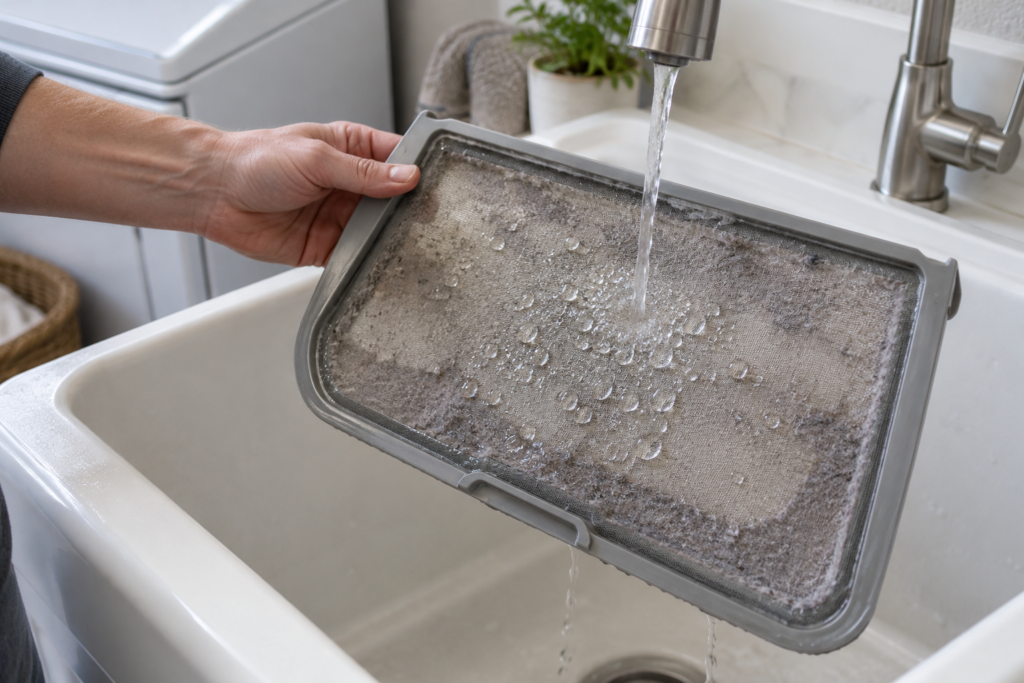
Two habits at two speeds: peel the lint off before every load, and wash the screen with warm soapy water once a month. Our washer and dryer maintenance guide gives exactly that routine, and our dryer fire prevention guidance says the first step takes about ten seconds and significantly reduces fire risk.
- Slide the filter out and peel the lint sheet off in one piece.
- Look into the filter slot and remove any lint that fell inside.
- Wash the screen monthly in warm soapy water with a soft brush.
- Let it dry completely before putting it back, so the screen does not clog with damp lint.
- Never run the dryer without the filter in place, since lint then goes straight into the machine and the duct.
How Do I Know the Filter Has a Film on It?
Pour a little water on the clean, dry screen: if it pools on the surface instead of running through, the mesh has a film and needs washing. The site's maintenance guide describes this test and explains why it works. Dryer sheets leave an invisible residue on the screen that blocks airflow over time, and it is invisible precisely because it is not lint.
The same residue is the reason the filter can look spotless while the dryer takes two cycles to finish a load. If you use fabric softener or dryer sheets every load, the film builds faster, and washing the screen more often costs nothing.
- Water pools on the mesh — wash it now, and again once a month.
- Water runs straight through — the screen is clear, so look further along the airflow path.
- Clothes damp after a normal cycle — test the filter before you suspect a part.
- Dryer feels hotter than usual — a sign of restricted airflow that should be dealt with now.
What Happens When the Filter and Vent Are Neglected?
The dryer overheats, and its safety parts react. A restricted exhaust is the leading cause of dryer fires in our fire prevention guide, which also notes that lint is highly flammable and that a spark from the motor, element or a worn belt can ignite it. Before it gets there, the dryer usually warns you.
- E62 — the not-heating guide describes it as the element overheating, usually from a restricted vent or a failed cycling thermostat.
- E64 — the dryer E64 page describes a heater open circuit, with a blown thermal fuse as the first cause, and says to address the overheating before replacing the fuse.
- Longer drying times — the quietest warning, and the one most owners ignore.
The lesson in all of these is the same: a part that keeps failing is often a symptom of airflow. Our dryer not heating guide says to clear the vent before replacing anything, otherwise the same part fails again.
Beyond the Filter: The Vent Duct
The filter catches most of the lint, and the rest ends up in the exhaust duct, which is why the site recommends a professional duct cleaning at least once a year, and twice a year for heavy laundry or long runs. You can check the basics yourself:
- Use rigid or semi-rigid metal duct — plastic or vinyl traps lint and can melt.
- Keep the run short and straight — every bend adds restriction, and the guide gives a maximum recommended length of 25 feet with deductions for elbows.
- Open the outside hood — the flap should move freely and not be blocked by debris, snow or nests.
- Use foil tape, not screws — screw tips catch lint.
If the dryer smells of burning, stop it, unplug it and do not use it again until the vent system has been inspected. Our dryer fire prevention guide has the full list of warning signs.
The Sensor Bars Are a Separate Job
The filter screen is not the only place softener leaves a film. The moisture sensor bars inside the drum collect it too, and when they do, an automatic cycle ends early with damp clothes. That is a different cleaning, with rubbing alcohol on a cloth, and it is described in our dryer moisture sensor care guide.
A Short Routine
Most of this guide boils down to a routine you can do without a tool. Run through it once a month and again whenever drying slows, and you will catch nearly everything before it becomes a repair.
- Wash the filter in warm soapy water and let it dry fully.
- Run the water test on the dry screen and note the result.
- Pull the dryer out an inch and look at the vent connection for lint or a crushed hose.
- Check the outside hood while the dryer runs, to see the flap open and hot air leave.
Write the date on the calendar, because the monthly wash is the one that is easiest to forget. If you share a laundry room with other people, put a note on the wall so the routine does not depend on one person remembering, and mention the monthly wash to anyone who uses the dryer only now and then.
Booking a Visit
If the filter is clean and the dryer still dries slowly, the exhaust duct or a heating part needs a look. Vent inspection and heating repairs are part of our Electrolux dryer repair service. Tell us the model, how long a load takes now and any code. Schedule a visit or contact us. The final price is confirmed after the on-site diagnosis, with a written estimate before any work begins.