 Patrick Cooper
Key Takeaways
- A recall is defined by a model number plus a serial range, so a model number alone never clears an appliance.
- Photograph the whole rating plate instead of transcribing it — a zero read as the letter O sends you to the wrong answer.
- The plate is inside the door opening on laundry, on the inner door edge on a dishwasher, and behind the storage drawer on most ranges.
- Recall remedies are free and come from the manufacturer; anyone offering to perform one for a fee is a reason to stop and verify.
- A second-hand or builder-installed appliance was almost certainly never re-registered, so notices will not reach you automatically.
The Bottom Line
Find the rating plate, photograph the model and serial together, and compare both against the published campaign rather than the model alone. If the notice describes a fire, shock or tip-over hazard, stop using the appliance before you do anything else.
Recall notices are written for people who already know their model number, which is exactly the information most owners do not have when they need it. Checking whether your appliance is affected takes about five minutes, and almost all of that is finding one small label. This guide is the procedure — where the label lives on each Electrolux appliance, what to copy off it, and how to compare it against an Electrolux recall list without guessing.
| Appliance | Where the rating plate usually is | How to get to it |
|---|---|---|
| Refrigerator or freezer | Inside wall near the crisper, or on the ceiling of the fresh food section | Open the door and empty the top shelf |
| Dishwasher | Edge of the inner door panel, or on the tub rim | Open the door fully and look at the side edge |
| Washer or dryer | Inside the door opening, or on the back panel near the top | Open the door; use a flashlight on the rim |
| Range or oven | Behind the storage drawer, or on the frame behind the door | Remove the drawer, or open the door and check the frame |
| Cooktop | Underside of the unit, or on the paperwork in the drawer below | Usually only visible from below the countertop |
| Microwave | Inside the door frame, or on the back of the cabinet | Open the door and look along the inner frame |
Copy Three Things, Not One
A recall is defined by a model number plus a range of serial numbers, and sometimes by a date code as well. A model number on its own is not enough to clear an appliance, and it is the most common reason people conclude they are unaffected when they are not.
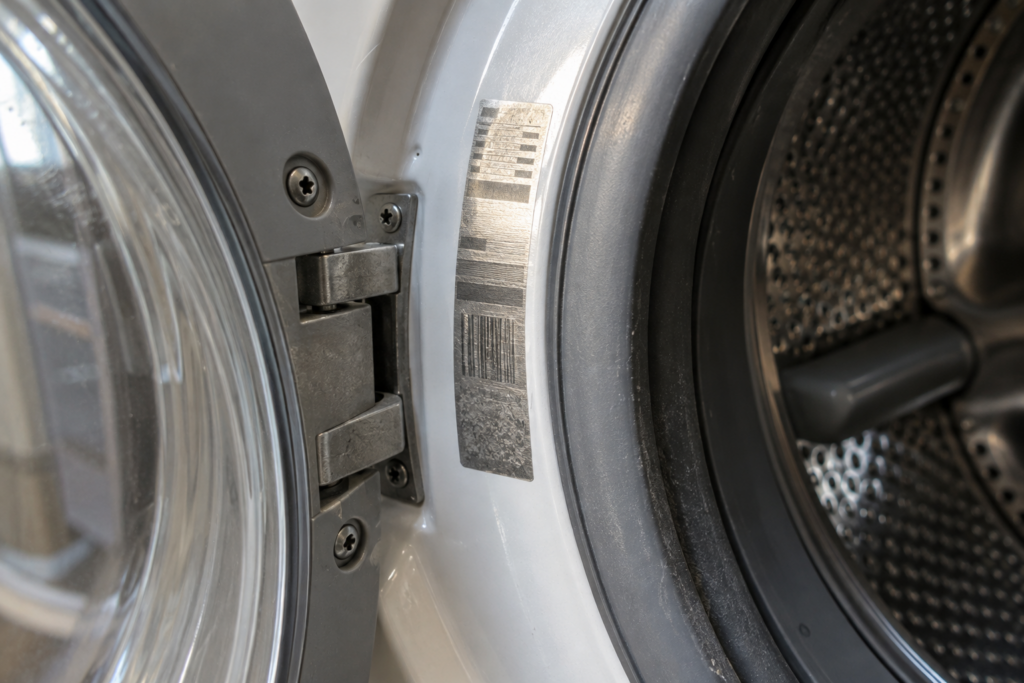
Photograph the whole label rather than transcribing it. Labels print the model and serial in similar type, and a zero read as the letter O sends you to the wrong answer. Keep the photograph somewhere you will find it again, because you will need it for parts, for warranty questions and for any future notice.
- Model number. Usually the longest alphanumeric string, often labeled Model or Mod.
- Serial number. Labeled Serial or Ser. This is what decides whether your unit falls inside an affected batch.
- Date or production code. Sometimes a separate short field, sometimes embedded in the serial.
- The appliance type as sold. A cooktop and a slide-in range can share a family name and belong to different campaigns.
Where to Check Once You Have the Numbers
We keep a recall and safety advisory archive for Electrolux and Frigidaire appliances, covering dryers, cooktops, refrigerators, microwaves, washers and dishwashers. Each entry sets out which appliance type the campaign covers and what the hazard was, so you can narrow down quickly whether any campaign applies to the kind of appliance you own before you start comparing numbers.
Two rules make the comparison reliable. First, match the full model number character for character, not the first few characters — appliance families run to dozens of variants and the affected ones are often a subset. Second, treat serial ranges as exact: a serial one digit outside a published range is outside it, and a serial inside it is inside it, regardless of how the appliance has behaved.
If your appliance was bought second-hand, installed by a builder, or came with the house, assume nothing about registration. Manufacturer notices reach the first registered owner, and that address stops being useful the moment the appliance changes hands.
If Your Model Is Listed
A recall remedy is free and comes from the manufacturer, not from a repair company. Nobody should be asking you to pay for a recall repair, and an offer to perform one for a fee is a reason to stop and verify.
- Stop using the appliance if the notice describes a fire, shock or tip-over hazard. Unplug it, or switch it off at the breaker for a hardwired unit.
- Keep the label photograph and the record of where you found the notice.
- Register for the remedy through the manufacturer's own recall process for that campaign.
- Do not modify or repair the recalled part yourself. A modified appliance can be refused the free remedy.
- Note what you were told, including any reference number, so a follow-up does not start from zero.
If Your Model Is Not Listed
Not being on a list is a useful answer but not a complete one. Campaigns are added over time, and the behavior that worried you enough to check is still worth explaining. Two patterns are worth acting on regardless of whether a notice exists: anything that smells hot or burnt, and anything that trips a breaker or a protective device more than once.
A dryer that repeatedly opens its thermal cutoff, for example, is showing you a restricted exhaust rather than a manufacturing defect, and the risk is real either way — our guide to dryer fire prevention covers what that looks like and how often the duct actually needs clearing. Cracked cooktop glass, a range that rocks when a loaded door is open, and a refrigerator with water pooling under it are all worth a look on their own merits.
Keep the Record Where You Will Find It
The five minutes you spend on this are worth repeating once, for every major appliance in the house, and then never again. Photograph each rating plate, name the files by appliance, and keep them together. It turns every future notice into a one-minute check and makes ordering parts straightforward.
Our Electrolux appliance safety guide covers the checks worth making across the whole kitchen and laundry room. If something about an appliance is behaving in a way a recall notice does not explain, our appliance diagnostics service can identify it: diagnostics start from $120, the final price is confirmed after the on-site diagnosis, and you receive a written estimate before any work begins. You can book a visit or send us the model and serial and we will tell you what we can see from here.