 Patrick Cooper
Key Takeaways
- The rear drum bearing and spider arm is the most expensive common Electrolux washer repair, from $450.
- A rumble during spin plus drum play when you pull the empty drum points to the bearing.
- Under about eight years old with no other faults, replacing the bearing is usually worth it.
- Past ten years, or with a second major fault, replacing the washer is usually the better value.
- The final price is confirmed after the on-site diagnosis, with a written estimate before work begins.
The Bottom Line
A bearing repair from $450 makes sense on a washer under about eight years old with nothing else wrong, and rarely beyond ten years. Test the drum for play, then decide with a written estimate in hand.
For an Electrolux washer with a failed drum bearing, repair or replace comes down to age: on a washer under about eight years old with nothing else wrong, replacing the drum bearing is usually worth doing, and past ten years it is rarely worth the money. The site lists the rear drum bearing and spider arm as the most expensive common washer repair, from $450 including parts and labor, because reaching the bearing means taking the whole machine apart.
| Age and condition | Bearing verdict | Why |
|---|---|---|
| Under 5 years, nothing else wrong | Repair | Years of service remain; check warranty first |
| 5 to 8 years, nothing else wrong | Repair, still cost-effective | Bearing is the one failure on a sound machine |
| 8 to 10 years, other wear showing | Close call | Seals, shocks and the boot seal may follow |
| Over 10 years | Replace | The site: bearings are where the repair case ends |
| Bearing plus a second major fault | Replace | A cascade of repairs soon passes a new price |
What Does the Drum Bearing Do in an Electrolux Washer?
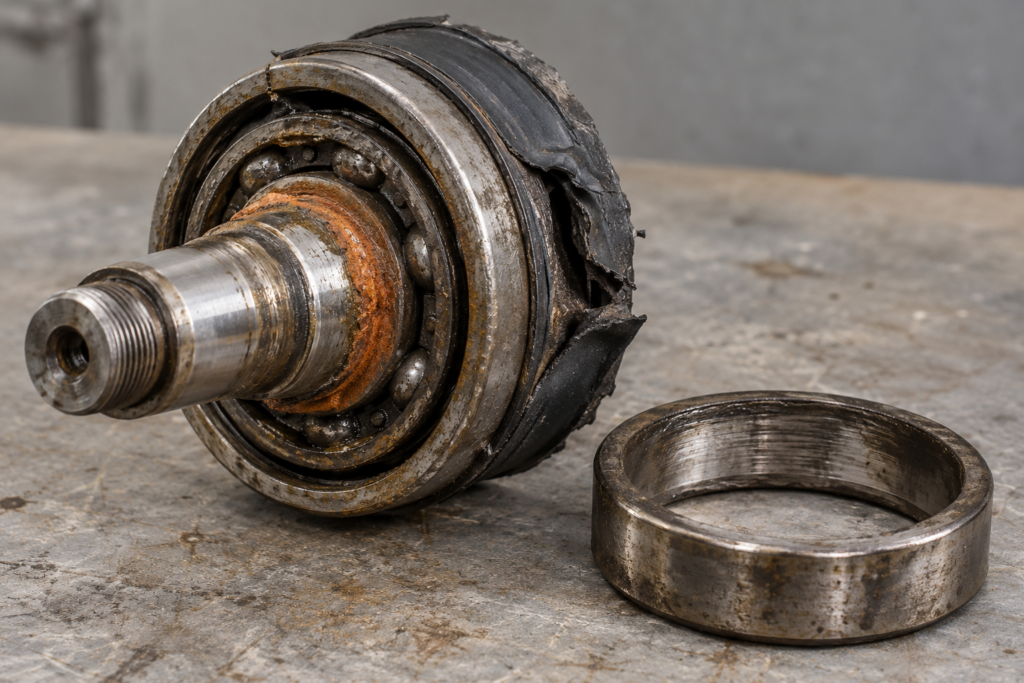
The bearing lets the drum spin freely on its shaft while carrying the weight of the wet load. On Electrolux front-load models the rear bearing is pressed into the rear half of the outer tub, which is what makes it such a large job: the tub has to be separated to reach it.
On a front-load washer the drum is carried on a shaft that runs through that bearing, and the bearing is sealed against the water in the tub. A good seal keeps detergent and water away from the steel, and the bearing then lasts for years of daily use. Most failures begin with that seal wearing, not with the bearing wearing out on its own, which is why moisture and overloading are the two biggest enemies.
That construction is also why a worn bearing does damage beyond itself. Once the seal fails, water reaches the steel, rust forms, and a bearing that could once be changed on its own becomes a bearing plus a shaft and a tub half. The earlier it is caught, the better the repair case.
How Do You Know the Drum Bearing Has Failed?
A rumbling or roaring noise that grows during the spin, together with a drum that moves when you push it, is the standard sign. Other causes make similar noises, so run the simple tests before anyone opens the washer.
- Unplug the washer and empty the drum completely.
- Reach in, grip the drum at the top and pull it toward you and push it back; any clunking play points to the bearing.
- Turn the drum by hand and listen for a gritty, grinding sound or an uneven drag.
- Look for rust-colored streaks around the rear of the drum or on the inside of the door glass.
- Note whether the noise is the same with a small, balanced load or only with a heavy one.
A noise that appears only with uneven loads is more likely a balance issue; the EF5 spin imbalance code page explains what that looks like. A noise that is there every time, with drum play, belongs to the bearing.
How Much Does Electrolux Washer Bearing Replacement Cost?
Anyone weighing an Electrolux washer bearing repair or replace choice should price it against the machine first. The site lists a rear drum bearing and spider arm replacement from $450, and describes it as a three to four hour job that must be done correctly to avoid premature re-failure. A diagnostic visit starts from $120, and the final price is confirmed after the on-site diagnosis, with a written estimate before any work begins.
Seen next to the other repairs in the Electrolux washer repair cost guide, the bearing is the outlier, which is why the rule of thumb matters. The site's starting point is that if a repair costs more than half the price of a comparable new Electrolux washer, from $800, replacement may be the smarter move.
- The part: the bearing set, seal and often the spider arm that carries the drum.
- The labor: removing the top, front panel, counterweights, springs and shock absorbers before the tub is split.
- The risk: a corroded shaft or damaged tub half changes the repair into a different quote.
Other Faults That Sound Like a Failed Bearing
Several cheaper faults produce a rumble, and ruling them out before paying for a bearing is worth the effort. A technician will usually test these first, and you can do the first two yourself.
- Loose or uneven feet: a washer that rocks on the floor rumbles on spin, and leveling is a free fix.
- Coins or underwire in the drum: small hard objects trapped between tub and drum rattle and grind.
- Worn shock absorbers: the washer shakes hard and bangs on spin, but the drum itself has no play.
- Failed drain pump: a whine or a grinding hum from the bottom, not from the drum.
Only the first of those leaves the drum with no play when you pull it, which is the single most useful distinction between a bearing and everything else.
Should You Repair or Replace the Washer With a Failed Bearing?
Repair it if the machine is under about eight years old and has had no other significant repairs; replace it if it is over ten years old or has other faults. In between, price the bearing against the age and condition of everything else, in line with the parent repair or replace guide for Electrolux washers.
Front-load washers typically last 10 to 14 years with proper care. If the bearings fail at year eight, the shock absorbers and the door boot seal may not be far behind, and a run of repairs can exceed the cost of a new unit quickly.
- Single fault, under eight years: repair, since the cabinet and electronics have years left.
- Water leaking at the rear of the tub: the seal has already failed; check for rust before agreeing a price.
- Heavy household use, ten or more loads weekly: parts wear faster, so weigh the age more strictly.
- Warranty or protection plan still running: ask before paying out of pocket.
The Electrolux washer worth repairing guide covers the same question for the machine as a whole.
Protecting a Bearing That Is Still Good
Bearings wear faster under overloading and long exposure to moisture. The site's maintenance advice for front-loaders applies directly: do not overload the drum, use high-efficiency detergent in the recommended amounts, and leave the door ajar after each cycle so the seal and the lower tub dry out.
- Level the washer: a machine that rocks puts uneven load on the bearing every spin.
- Do not stuff the drum: a full drum of heavy towels loads the bearing hardest.
- Wipe the door seal weekly: a clean seal keeps water from sitting where it should not.
When a bearing is failing, our Electrolux washer repair service can confirm it and give a written estimate, so you decide with the number in hand. You can book a visit or send us the model number, the age and what you hear during the spin.